

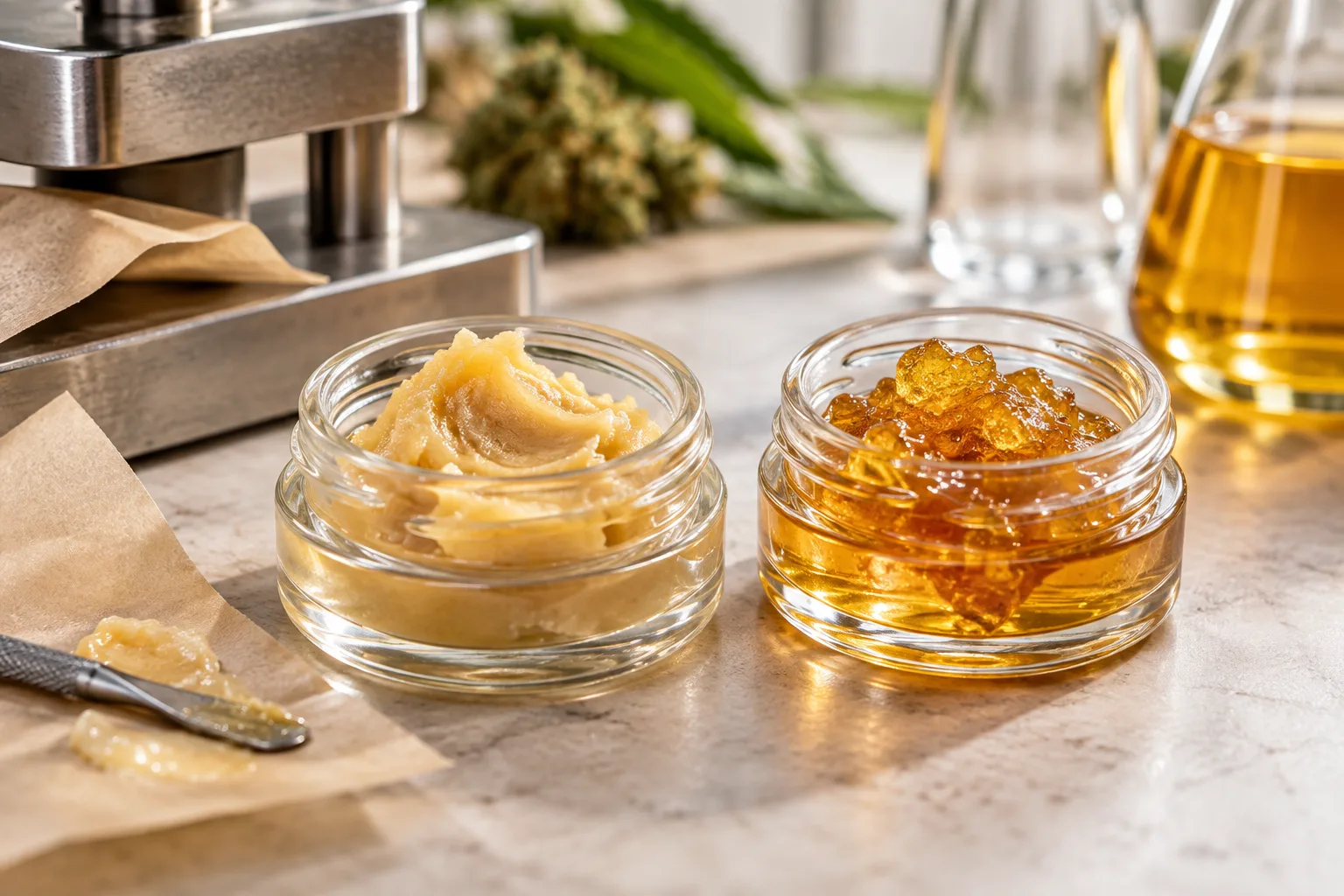
These two words cause more confusion at the dispensary counter than almost any other terms in cannabis. They sound nearly identical; both are associated with concentrates, and worse still, “resin” alone refers to at least three completely different things depending on context. No wonder people mix them up.
The rosin vs resin distinction matters because these products are made differently, contain different compounds in different ratios, and deliver noticeably different experiences. Once the terminology clicks, you’ll be able to read a concentrate label, understand what you’re looking at, and make a more informed choice about what you’re actually consuming.
What “Resin” Actually Means: Three Different Things
Before getting into the rosin vs resin comparison, it’s worth clarifying that “resin” is doing a lot of heavy lifting in cannabis vocabulary. Depending on who’s using it and in what context, it can refer to three distinct things.
Plant resin is the sticky, oily substance produced naturally by the trichomes, the tiny, hair-like structures that coat cannabis flowers and sugar leaves. Trichomes are where the plant concentrates its cannabinoids and terpenes, and the resin they secrete is the raw biological material that all cannabis extracts ultimately start from. When a budtender talks about a “resinous” flower, they mean one with dense, active trichome coverage, a visible quality indicator.
Cannabis concentrate resin refers to products made by extracting those trichome compounds using solvents. Live resin and cured resin both fall into this category. The solvent — typically butane, propane, or CO2 — washes the cannabinoids and terpenes off the plant material, and the resulting solution is then purged of the solvent to produce the final concentrate. This is what most people mean when they see “resin” on a dispensary menu.
Pipe resin is something else entirely: the dark, tar-like buildup that accumulates inside a pipe, bong, or bowl over time. It’s the combustion byproduct of burning cannabis — not a concentrate, not a product, and not something intended for consumption. It’s essentially the cannabis equivalent of the residue inside a smokestack.
Getting these three uses straight is the foundation of the rosin vs resin conversation, because each one has a completely different profile, use case, and safety consideration.
A Quick Reference: Rosin vs Resin at a Glance
| Rosin | Live Resin | Cured Resin | Pipe Resin | |
| How it’s made | Heat + pressure, no solvents | Solvent extraction from fresh-frozen plant | Solvent extraction from dried/cured plant | Combustion byproduct |
| Solvent-free? | Yes | No | No | N/A |
| Terpene preservation | High | Very high | Moderate | None |
| Typical THC range | 60–80% | 60–90% | 60–90% | Low / variable |
| Safe to consume? | Yes | Yes (lab-tested) | Yes (lab-tested) | No |
| Price point | Higher | Higher | Moderate | — |
What Is Rosin?
Rosin is a solventless cannabis concentrate made by applying heat and pressure to cannabis flower, hash, or kief. Heat and mechanical pressure cause the trichomes to burst and release their resinous contents, which are then collected as a golden, sap-like extract.
The process is straightforward enough that consumers have been making rosin at home with hair straighteners and parchment paper for years, though commercial operations use industrial rosin presses that deliver precise, controlled pressure and temperature to maximize yield and quality. At the commercial level, rosin can be pressed from fresh-frozen cannabis (producing “live rosin”), dried and cured flower or bubble hash — with bubble hash rosin generally considered the premium tier because of its high trichome concentration going into the press.
What makes rosin significant is what it doesn’t involve: no butane, no propane, no CO2, no post-processing purge to remove residual solvents. The final product is essentially a direct mechanical extraction of the plant’s trichome contents. For consumers who want to know exactly what’s in their product, that simplicity matters.
Rosin typically tests between 60–80% THC and retains a robust terpene profile, especially when pressed at lower temperatures. Lower-temperature pressing preserves more of the volatile terpene compounds that give the product its aroma and flavor, and as entourage effect research shows, those terpenes aren’t just cosmetic. They actively influence how the cannabinoids interact with your system.
What Is Live Resin?
Live resin is a solvent-extracted concentrate made from fresh-frozen cannabis plant material that was harvested and immediately frozen rather than dried and cured. The freezing step sets live resin apart from other solvent-based concentrates, and it’s why live resin tends to have the most aromatic, flavor-forward profile of any concentrate type.
Here’s why the fresh-freeze matters: drying and curing cannabis degrades terpenes. Heat, light, and time all cause terpene evaporation, which is why properly cured flower smells less intense than a fresh-cut plant. Freezing the plant immediately after harvest locks in the terpene profile at its peak—essentially capturing the plant at its most aromatic moment before degradation can occur.
The extraction process for live resin uses hydrocarbon solvents (typically butane or propane) to strip the cannabinoids and terpenes from the frozen plant material. The resulting solution is then purged of residual solvent through a combination of heat and vacuum pressure. When done correctly in a licensed, commercial facility, residual solvent levels in the final product fall well below the limits set by state regulatory agencies, typically under 500 parts per million for butane.
Live resin can take several forms: sauce (a liquid-heavy consistency with large THCA crystals), sugar (a grainy, wet-sand texture), badder (a creamy, whipped consistency), or cartridges filled with live resin oil. The consistency depends on post-extraction processing, but the defining characteristic across all of them is the fresh-frozen starting material and the resulting terpene richness.
Cured Resin vs Live Resin: What Changes
Cured resin follows the same solvent-extraction process as live resin but starts from dried, cured flower rather than fresh-frozen material. That single difference in starting material produces meaningful differences in the final product.
Cured resin tends to have a lower terpene concentration than live resin because drying and curing allow some of those volatile compounds to evaporate before extraction even begins. The cannabinoid potency can be comparable — both types test in the 60–90% THC range, but the aroma, flavor, and overall terpene complexity of cured resin products are typically less pronounced.
For consumers who prioritize potency over flavor, cured resin is often available at a lower price point and delivers comparable THC content. For consumers who care about the full-spectrum terpene experience — the nuance of how a specific cultivar actually tastes and smells — live resin justifies the premium.
Is Live Rosin the Same as Live Resin?
No, and this is one of the most common points of confusion in the rosin vs resin conversation. Both start from fresh-frozen cannabis, but the extraction method is completely different.
Live rosin = fresh-frozen cannabis processed solventlessly with heat and pressure. No solvents, ever.
Live resin = fresh-frozen cannabis processed with hydrocarbon solvents, then purged.
Both products capture the plant’s terpene profile at its peak freshness, which is why both command premium pricing. The difference is the extraction philosophy: live rosin appeals to consumers who want zero solvent involvement; live resin appeals to consumers comfortable with solvent extraction who want the robust terpene profile fresh-frozen material provides.
In practical terms, live rosin is generally considered the premium tier of the premium tier; it requires more starting material to produce, yields less per pound of input, and takes more time and skill to make well. That’s why it’s typically the most expensive concentrate category on the menu.
How Is Rosin Made? The Process Explained
The rosin-making process is more intuitive than most extraction methods because it’s purely mechanical. No chemistry degree required.
At home, the process works like this: wrap a small amount of flower in parchment paper and place it between the plates of a hair straightener set to around 200–220°F. Gentle pressure for 3 to 7 seconds compresses the trichomes and releases their resinous contents onto the parchment paper, which is then collected with a dabbing tool.
Commercial rosin presses work on the same principle but with far greater precision. Hydraulic or pneumatic pressure systems apply several thousand pounds of force per square inch across large heated plates, with temperature control precise to within a degree or two. This level of control matters because temperature affects the balance between yield and terpene preservation: higher temperatures extract more total material but can degrade delicate terpenes; lower temperatures preserve more flavor compounds but produce smaller yields.
Starting material also significantly affects quality. Flower pressed directly produces rosin with plant waxes and lipids present, which some consumers prefer to filter out through cold-curing or winterization. Hash rosin — made by pressing bubble hash rather than whole flower — starts with a higher concentration of trichome heads and produces a cleaner, more refined product with a more concentrated cannabinoid and terpene profile.
Why Is Rosin More Expensive Than Resin?
The price difference between rosin and solvent-extracted resin products comes down to yield and labor.
Solvent extraction is efficient. Solvents can penetrate plant material thoroughly and pull out a high percentage of the available cannabinoids and terpenes in a relatively short time. The process scales well, can be largely automated, and produces a consistent yield per pound of input material.
Rosin pressing is less efficient by comparison. Even with a high-quality press and optimal technique, rosin yield from flower typically runs 10–25% by weight—meaning a gram of rosin requires 4 to 10 grams of starting material. Hash rosin can achieve better yield ratios, but the hash itself requires additional labor to produce (the ice water extraction process for bubble hash is time- and labor-intensive). All of that adds up to a higher cost per gram at the dispensary counter.
For consumers who specifically want a solventless product and are willing to pay for it, that premium is straightforward. For consumers comfortable with solvent-extracted products who prioritize value or the specific profile live resin delivers, the price difference makes the resin side of the rosin vs resin comparison genuinely competitive.
Is It Safe to Smoke Pipe Resin?
This question comes up often, and the short answer is: no, not really.
Pipe resin is fundamentally different from any of the concentrate products discussed above. It’s not extracted cannabinoids and terpenes — it’s the accumulated residue from combustion, containing carbon, tar, and whatever other byproducts formed when cannabis was burned. The THC content in pipe resin is low and inconsistent, and consuming it means inhaling a concentrated dose of combustion byproducts.
People smoke pipe resin when they’re out of cannabis, and the resin is all that’s available, which is understandable in the short term. But it’s worth being clear that it’s not a cannabis product in any intentional sense; it’s a last resort, not a concentrate. The experience is typically harsh, the effects are unpredictable, and the health considerations are more significant than with any properly produced cannabis product.
Putting Rosin vs Resin in Context
The rosin vs resin distinction comes down to one fundamental question: how was it made? Rosin involves no solvents, just heat, pressure, and time. Resin concentrates use chemical solvents to strip cannabinoids and terpenes from the plant, then purge those solvents from the final product. Both can be excellent; the choice depends on your priorities.
If you want the cleanest possible extraction process and are willing to pay a premium, explore rosin —especially live rosin or hash rosin. If you want the most terpene-rich flavor experience and are comfortable with lab-tested solvent extraction, live resin is hard to beat. If you’re newer to concentrates and want to understand the potency picture before diving into the format question, the THC explainer on the Garden Club blog is a useful foundation.
At Garden Club, our concentrate selection spans these categories, and our staff can walk you through the specific products on the floor, what they’re made from, how they were extracted, and what the lab results show. That conversation is a lot more useful than trying to decode the terminology alone.
