

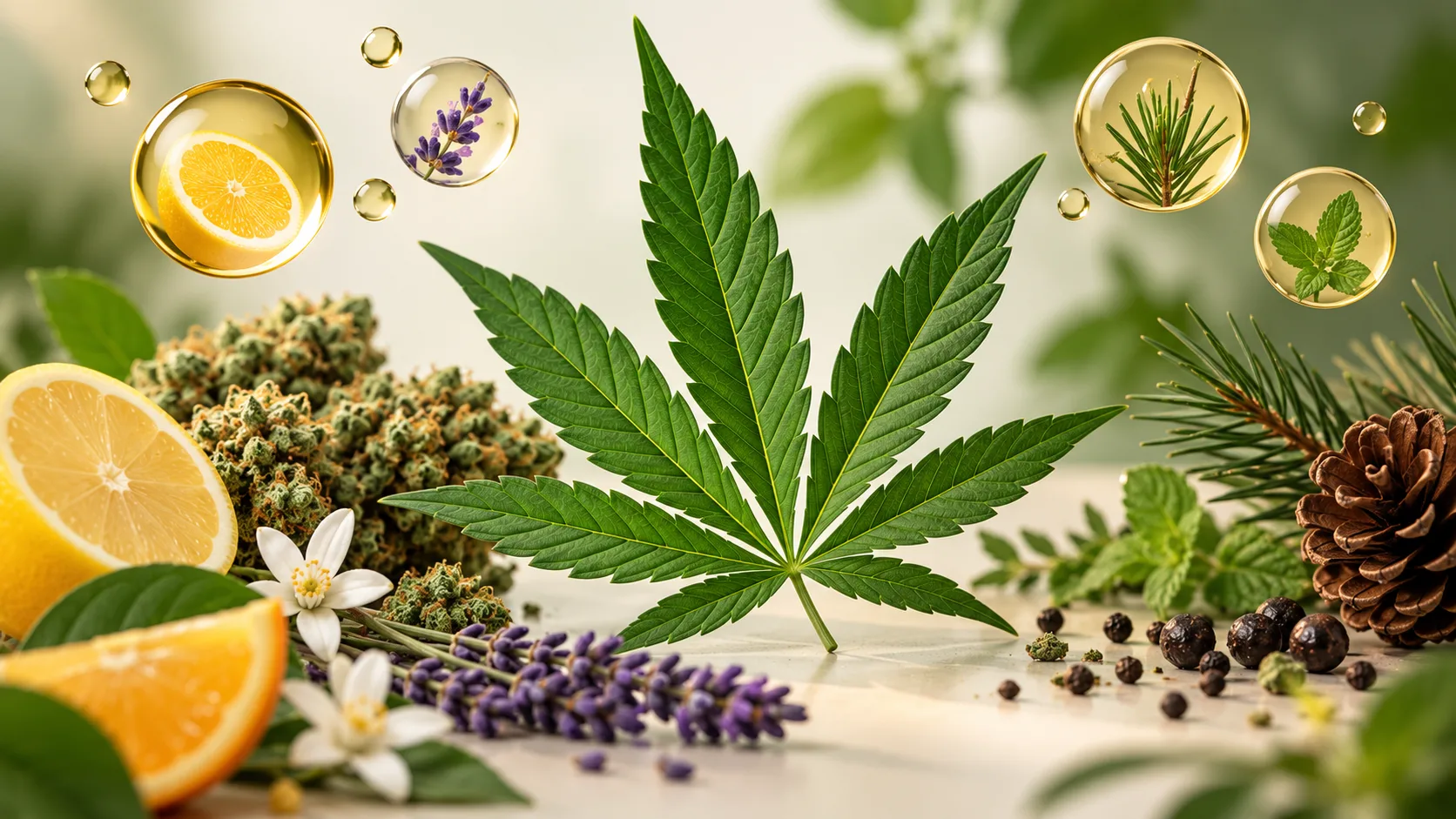
Ever crack open a jar of flower and stop to ask, wait, why does this smell like a bag of lemons? Or pine needles? Or straight-up pepper? That’s terpenes doing their thing — and they’re way more interesting than just a nice smell.
Terpenes are natural compounds found in all kinds of plants, not just cannabis. They’re what make lavender calming, citrus energizing, and pine forests smell like a hiking trip you actually want to take. In cannabis, terpenes are responsible for the unique aromas and flavors you notice from strain to strain, and they may also play a real role in how each one makes you feel.
Let’s break it all down.
So What Exactly Are Terpenes?
Terpenes are organic compounds produced in the essential oils of plants. In nature, they serve a practical purpose: warding off pests, fighting bacteria and fungi, and luring in pollinators. Basically, terpenes are a plant’s whole personality and defense system wrapped into one.
In cannabis, they’re produced in the same trichomes as cannabinoids like THC and CBD — those tiny, sticky crystals coating quality flower. Each strain has its own terpene profile, which is a big part of why two different sativas can smell (and feel) completely different.
Do Terpenes Actually Do Anything?
Research is still catching up, but early findings suggest terpenes can influence mood, energy, relaxation, and more – both on their own and in combination with cannabinoids.
Here’s where it gets cool: terpenes are thought to work together with THC, CBD, and other cannabis compounds to enhance each other’s effects. Researchers call this the entourage effect.
A2021 study published in Scientific Reports from the University of Arizona was one of the first to show that terpenes and cannabinoids can produce an additive effect when combined, finding that cannabis terpenes mimic cannabinoids and produce similar pain-relieving effects that are amplified when used together. That’s part of why checking a product’s terpene profile can help you find something that actually fits what you’re going for.
Meet the Big Players: Common Cannabis Terpenes
Myrcene
The most common terpene in cannabis. Myrcene has an earthy, musky, slightly fruity aroma — think ripe mango or fresh herbs. It’s often linked to more relaxing, body-heavy effects, which is why strains high in myrcene are popular for winding down at the end of the day.
Research published on ScienceDirect notes that myrcene has demonstrated anti-inflammatory and anti-nociceptive (pain-blocking) effects in multiple animal models, and a 2022 study confirmed its anxiolytic properties in preclinical trials.
Aroma: Earthy, musky, fruity
Associated effects: Relaxing, sedating
Also found in: Mango, hops, lemongrass
Limonene
Limonene is exactly what it sounds like — bright, citrusy, and a little zesty. It’s found in the rinds of citrus fruits and cannabis strains alike. Research here has gotten genuinely exciting: a 2024 double-blind study led by Johns Hopkins University, published in the journal Drug and Alcohol Dependence, found that combining d-limonene with THC significantly reduced feelings of anxiety and paranoia, and the more limonene was added, the stronger that effect. It’s a strong data point for anyone who’s ever felt a little too in their head after cannabis.
Aroma: Citrus, lemon, orange
Associated effects: Uplifting, stress-relieving
Also found in: Lemons, oranges, limes
Linalool
If you’ve ever found lavender calming, you can thank linalool. This floral, slightly sweet terpene is abundant in lavender and also pops up in many cannabis strains. Multiple peer-reviewed studies have found that inhaled linalool exhibits anxiolytic properties — astudy published on ScienceDirect found it reduced anxiety-related behaviors and increased social interaction in mice, with effects comparable to the diazepam treatment group.
More recently, a 2024 NIH-published study confirmed anxiolytic effects in both linalool and myrcene via inhalation models that closely mirror real cannabis use.
Aroma: Floral, sweet, light
Associated effects: Calming, anxiolytic
Also found in: Lavender, basil, coriander
Pinene
Take a deep breath in a pine forest — that’s pinene. One of the most common terpenes in the natural world, pinene brings a fresh, woodsy scent to strains that carry it. Acomprehensive review published in NIH’s PMC database documented a wide range of pharmacological activities for alpha- and beta-pinene, including anti-inflammatory, analgesic, and antioxidant effects. There’s also early evidence it may help counteract some short-term memory effects associated with THC — though research in humans is still limited.
Aroma: Pine, earthy, fresh
Associated effects: Alert, stress-relieving, anti-inflammatory
Also found in: Pine trees, rosemary, basil
Beta-Caryophyllene
Beta-caryophyllene (BCP) is the spicy one — peppery, clove-like, a little warm. What makes it especially interesting is that, unlike most terpenes, BCP can directly bind to CB2 cannabinoid receptors in the body’s endocannabinoid system. This was confirmed in alandmark 2008 study published in PNAS (the Proceedings of the National Academy of Sciences), which identified BCP as a dietary cannabinoid — the first of its kind. More recent research out of theNIH continues to explore its anti-inflammatory and neuroprotective potential.
Aroma: Peppery, spicy, clove-like
Associated effects: Anti-inflammatory, antioxidant
Also found in: Black pepper, cloves, cinnamon
Where Do You Find Terpenes in Cannabis Products?
Good news: terpenes show up across most product formats. Here’s what to look for:
- Flower — Fresh, properly cured flower retains its full terpene profile. This is the most direct way to experience terpenes as nature intended.
- Concentrates — Live resin and other solventless or cold-process extracts preserve terpenes especially well. If terpene flavor is important to you, these are worth exploring.
- Vape cartridges — Quality carts often reintroduce cannabis-derived terpenes back into the oil to replicate specific strain profiles.
- Tinctures — Whole-plant extractions tend to carry a solid terpene profile alongside cannabinoids.
- Edibles — Some producers add terpenes during formulation to target specific effects or enhance flavor.
- Topicals — Certain creams and balms include terpenes (sometimes from non-cannabis plant sources) for scent and potential localized effects.
How to Use Terpene Profiles to Pick Your Product
Not sure where to start? Think about what you’re looking for:
- Relaxation or sleep → Look for high myrcene or linalool
- Stress relief or mood lift → Limonene-forward strains are a solid bet
- Something for soreness or inflammation → Beta-caryophyllene and myrcene are both worth trying
- Staying sharp while still taking the edge off → Pinene may help balance things out
The budtenders at The Garden Club can walk you through the terpene profiles of what we carry, just ask!
Keep Your Terpenes Fresh
Terpenes are volatile compounds, which means they degrade when exposed to heat, light, oxygen, and moisture. To get the most out of your products:
- Store in a cool, dark place away from direct sunlight
- Use airtight containers to minimize air exposure
- Avoid big temperature swings
- Keep things dry — humidity can lead to mold, and moisture accelerates breakdown.
Most products have a use-by date for a reason. Proper storage won’t beat the clock forever, but it’ll get you a lot further.
The Bottom Line
Terpenes aren’t just what make your flower smell good (though they do that too). They’re an active part of the cannabis experience — influencing effects, working alongside cannabinoids, and giving every strain its own character.
Next time you’re shopping at The Garden Club, take a second to check the terpene profile on the label. It’s one of the best tools you’ve got for finding something that actually works for you.
